Most deceased estate properties come to market tired rather than damaged. Buyers are usually pricing in a renovation anyway, so the goal is not to make the house perfect — it is to remove the things that make a buyer nervous, and to make the property photograph well. Doing that in the right order saves both money and weeks.
Do not list before you can legally sell
A property held in the deceased's sole name generally cannot be sold until a grant of probate or letters of administration has issued and the executor's authority is established. You can prepare the property in the meantime, but plan the campaign around the grant rather than the other way around — timeframes at the Supreme Court of Victoria Probate Office vary and are worth checking before you commit to an auction date.
Every Victorian sale also needs a vendor statement (a section 32) and a contract of sale prepared by a solicitor or licensed conveyancer. Consumer Affairs Victoria sets out what must be disclosed. Start that early — missing certificates are the most common reason an estate campaign slips.
The correct order of works
Run the jobs in this sequence and no trade undoes another's work.
Clear the contents first. Nothing else can be assessed properly through forty years of furniture. A full deceased estate clearance also frequently uncovers issues the family did not know about — a damp patch behind a wardrobe, a cracked window, a failed hot water service.
Then rubbish, garden and shed. Sheds, garages and back gardens are where estate properties lose buyers, because an overgrown yard reads as neglect and makes people assume the house is worse than it is. Rubbish removal plus a solid garden tidy is the cheapest presentation win available.
Then repairs. Only now can you see what actually needs doing.
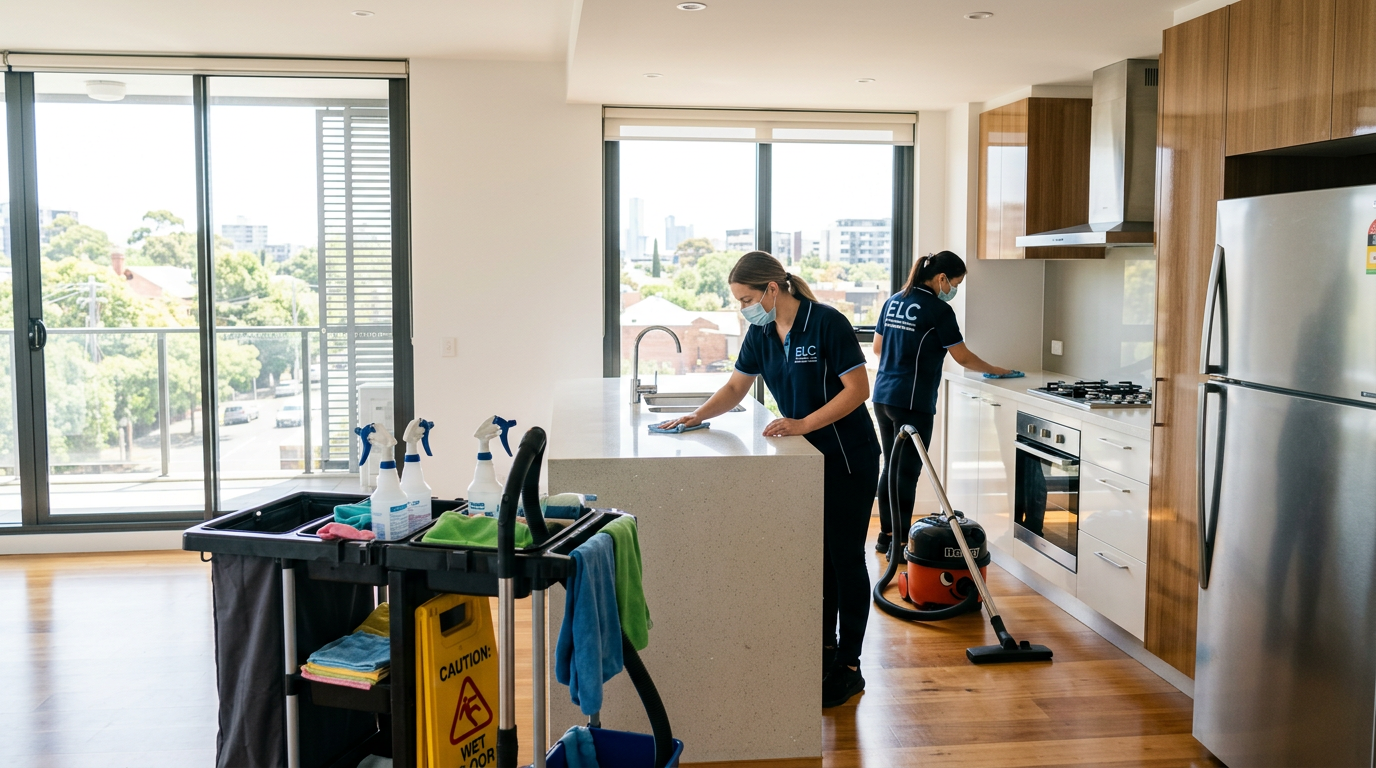
Then the deep clean. Carpets, windows, oven, bathrooms, cornices, light fittings. A vacate or bond-standard clean is the right level here — it is more thorough than a domestic clean and priced for empty properties.
Then styling and photography. Last, always.
Where the money is well spent
Smell is the single biggest issue in estate homes, and it is what buyers talk about in the car afterwards. Professional carpet cleaning, or removing carpet entirely where there are boards underneath, plus airing the house for several days, fixes most of it. Where there has been long-term smoking or a pet, you may need an ozone or specialist treatment rather than a standard clean.
Light is the second. Clean the windows inside and out, cut back anything blocking them, replace every dead globe, and match the colour temperature across the house so photographs are not half warm and half blue. Replacing yellowed 1970s light fittings costs very little and instantly modernises a room.
Neutral paint in the main living areas and a tidy front garden round it out. Beyond that, most spending has a poor return.
Where the money is usually wasted
New kitchens and bathrooms in a property a buyer intends to renovate almost never return their cost. Neither do new floors, landscaping projects, or restumping done pre-emptively without a report saying it is needed. If a building inspection is likely to flag something structural, it is usually better to price the property accordingly and disclose it than to half-fix it.
The exception is anything that stops a bank valuing the property or a buyer getting insurance — unsafe wiring, a leaking roof, an unrailed deck. Fix those.
Empty versus styled
Empty rooms photograph badly and make buyers underestimate the size of a space. Hired furniture for a four-to-six week campaign is a real cost, and it is worth asking the agent for a straight opinion on whether the local market rewards it. In inner Melbourne it usually does; in a country town where every buyer is local and already knows the house, it usually does not.
Getting the trades organised
Estate sales run on tight timelines, and the clearance is the bottleneck for everything downstream. Book it as soon as the family has taken what it wants. Many operators listed here will handle clearance, rubbish removal and the vacate clean as one booking, which is both cheaper and easier to schedule than three separate trades.
If you have not costed the clearance yet, What Does an Estate Cleanout Cost in Victoria? explains how quotes are built. If you are earlier in the process, start with Clearing a Deceased Estate in Victoria.
Tell us the suburb and what the property needs, and we will send you a shortlist of suitable businesses within 24 hours.